CAVA Salmon + Strawberry Sesame Bowl Calories and Nutrition
CAVA meal planning guide
Last updated: July 28, 2026
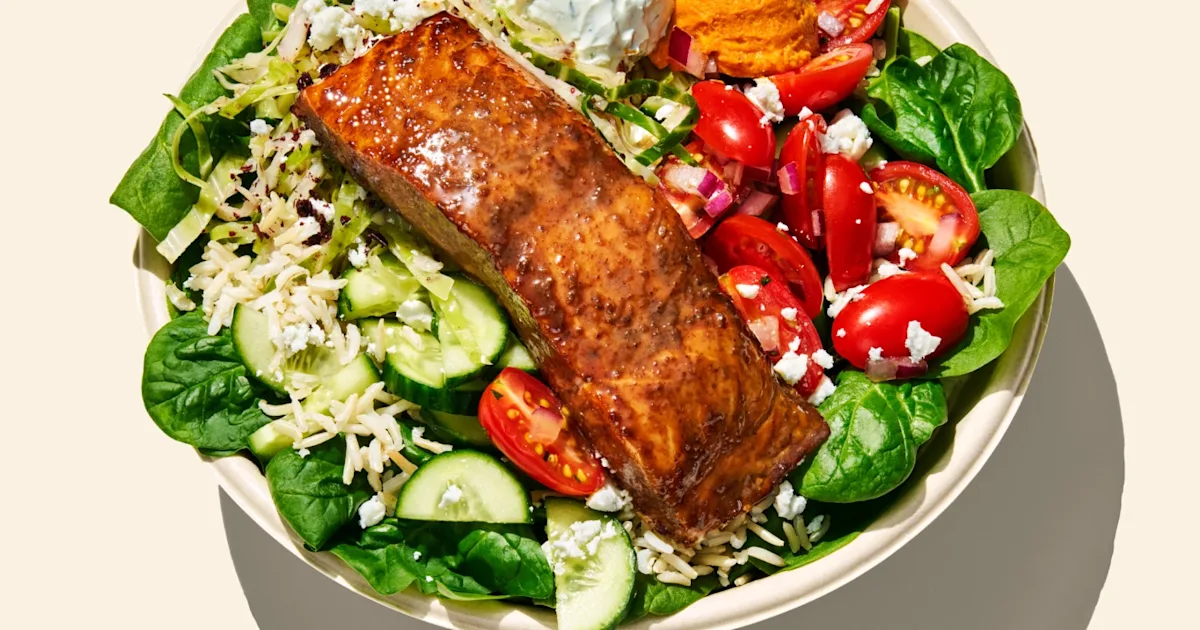
The CAVA Salmon + Strawberry Sesame Bowl has 700 calories in this site snapshot. The complete order provides 36g protein, 46g carbohydrates, 7g fiber, and 43g fat. Its glazed salmon, rice, dips, feta, vegetables, greens, slaw, and strawberry sesame dressing all contribute, so the bowl total should not be confused with salmon by itself.
Salmon + Strawberry Sesame nutrition snapshot
The curated Salmon + Strawberry Sesame Bowl is listed at 700 calories, 43g total fat, 46g carbohydrates, 7g fiber, 13g sugar, and 36g protein. The same snapshot lists 9g saturated fat, 110mg cholesterol, and 1,860mg sodium. Those numbers describe the complete published build rather than a plain serving of fish or a custom bowl with similar ingredients.
Calories give a useful starting point, but the other values explain how the meal is structured. Protein comes largely from salmon and smaller contributions from other ingredients, while rice supplies much of the carbohydrate base. Dips, feta, the salmon glaze, and dressing contribute flavor and richness. Vegetables, spinach, cucumber, tomato, and slaw add variety without erasing the nutrition from the denser components.
- Calories: 700 for the curated bowl.
- Protein: 36g.
- Carbohydrates: 46g, including 7g fiber.
- Fat: 43g, including 9g saturated fat.
- Sodium: 1,860mg.
Why glazed salmon is not the complete bowl total
Glazed Salmon alone is listed at 320 calories and 23g protein in the calculator snapshot. The curated bowl adds tzatziki, red pepper hummus, cucumber, feta, tomato + onion, sumac slaw, brown rice, spinach, and Strawberry Sesame dressing. Those additions account for the difference between a protein serving and a finished 700-calorie meal with multiple textures and flavor layers.
It is therefore inaccurate to log only the salmon when you order the complete bowl. Brown rice, dips, cheese, and dressing can each change calories, fat, carbohydrates, or sodium, while produce contributes additional volume and fiber. If you remove, replace, or request a lighter portion of one ingredient, rebuild the order component by component instead of subtracting an unverified estimate from 700.
Strawberry Sesame versus Yogurt Dill salmon bowls
The Salmon + Yogurt Dill Bowl is listed at 710 calories and 35g protein, making it only 10 calories higher than the Strawberry Sesame version and 1g lower in protein. That narrow calorie difference does not make the bowls nutritionally identical. Their dips, vegetables, greens, toppings, rice choices, and dressings differ, so compare the complete ingredient lists rather than choosing from calories alone.
The Strawberry Sesame bowl is listed with 46g carbohydrates, 7g fiber, 43g fat, and 1,860mg sodium. The Yogurt Dill bowl has 49g carbohydrates, 5g fiber, 43g fat, and 1,870mg sodium in this snapshot. The profiles are close, so preference, ingredient compatibility, and the exact modifications you plan may matter more than the ten-calorie gap.
How the dressing, dips, and rice affect the meal
Strawberry Sesame dressing is listed at 60 calories in the component data, but it is only one part of the bowl. Brown rice, glazed salmon, tzatziki, red pepper hummus, and feta are also meaningful contributors. Removing the dressing would not turn the meal into a 320-calorie salmon serving, and adding extra dressing would move the total beyond the published curated build.
A practical way to compare modifications is to keep the protein fixed and test one decision at a time. Compare the full rice portion with a greens-heavy base, then decide whether you want both dips, feta, and the full dressing serving. This keeps the ingredients you value visible and makes it easier to see which choice changes calories, protein, fiber, fat, or sodium most.
Sodium and allergen details deserve a separate check
The bowl is listed at 1,860mg sodium, so sodium may be as important as calories for some planning goals. Prepared salmon, dips, feta, seasoned rice, slaw, and dressing can all contribute to the total. A bowl can include vegetables and still be sodium-dense; looking at only the greens or fresh toppings gives an incomplete picture of the assembled meal.
The recipe includes fish and dairy ingredients, and its hummus and sesame-named dressing may matter for sesame-related decisions. Ingredient lists, suppliers, recipes, and cross-contact practices can change. Nutrition totals cannot establish allergy safety, so use CAVA's current allergen information and speak with restaurant staff when an allergy or intolerance affects the order.
How to calculate a customized salmon bowl
Start with Glazed Salmon in the calculator, then add the base, dips, toppings, and dressing you actually expect to receive. Match brown rice and spinach first, followed by tzatziki, red pepper hummus, cucumber, feta, tomato + onion, sumac slaw, and Strawberry Sesame dressing. This creates a transparent component receipt instead of assuming every salmon bowl remains at 700 calories.
After building the order, review protein and fiber alongside calories, fat, and sodium. If the result is higher than your target, simplify one optional element and recalculate rather than removing several ingredients at once. Portions and availability can vary by restaurant, so treat the result as a planning estimate and verify current official nutrition information when precision is important.
Before you order
This independent guide is for planning and comparison. Restaurant menus, portions, recipes, suppliers, and allergen details can change, so verify nutrition-sensitive decisions with official CAVA resources before ordering.