CAVA Greek Chicken Pita Calories and Nutrition
CAVA meal planning guide
Last updated: July 28, 2026
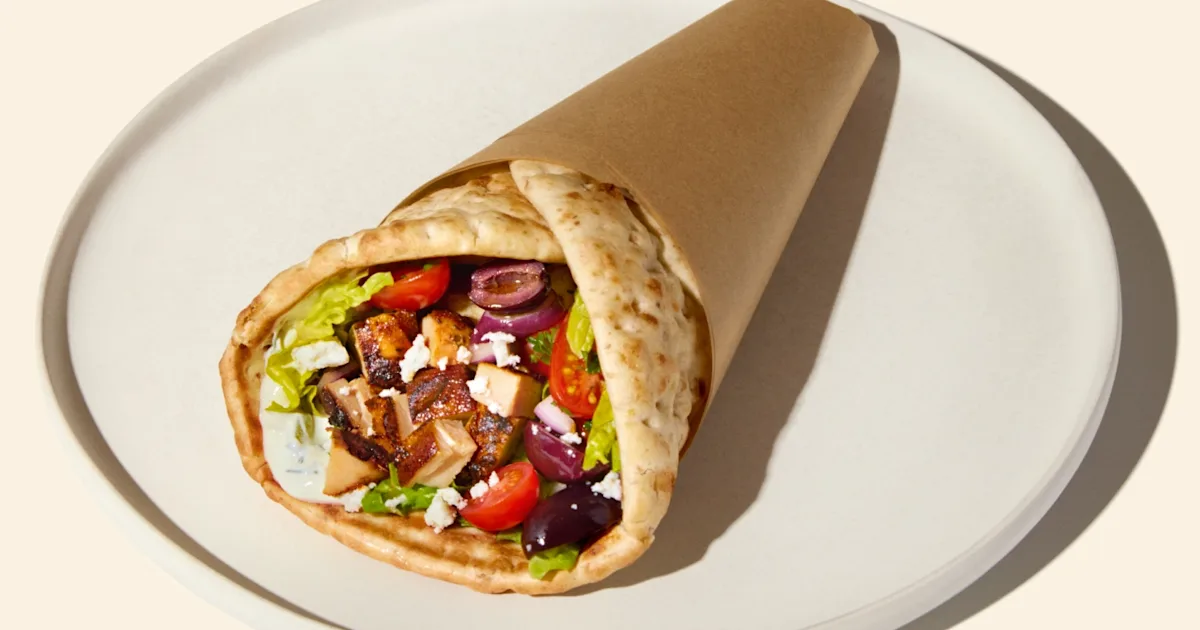
The CAVA Greek Chicken Pita has 720 calories in this site snapshot. It provides 48g protein, 64g carbohydrates, 8g fiber, and 30g fat, while its listed sodium reaches 2,230mg. Grilled chicken anchors the protein, but the whole pita, tzatziki, feta, olives, vegetables, and Yogurt Dill dressing all belong in the complete nutrition total.
Greek Chicken Pita nutrition snapshot
The curated Greek Chicken Pita is listed at 720 calories, 30g total fat, 64g carbohydrates, 8g fiber, 6g sugar, and 48g protein. It also contains 9g saturated fat, 170mg cholesterol, and 2,230mg sodium in this snapshot. These numbers apply to the published standard build, not grilled chicken alone or a different custom pita assembled with similar ingredients.
The 48g protein total is notable, but protein is only one part of the order. The pita contributes a large share of the carbohydrates, while chicken, tzatziki, feta, olives, and dressing shape fat and sodium. Tomato, onion, and romaine add produce and texture. Reading all of those values together gives a more useful picture than calling the pita healthy or unhealthy from one number.
- Calories: 720 for the curated pita.
- Protein: 48g.
- Carbohydrates: 64g, including 8g fiber.
- Fat: 30g, including 9g saturated fat.
- Sodium: 2,230mg.
Grilled chicken and the whole pita set the foundation
Grilled Chicken is listed at 250 calories and 28g protein, while a whole pita is listed at 320 calories and 13g protein in the component snapshot. Together they explain much of the meal's energy and protein before tzatziki, feta, olives, vegetables, and Yogurt Dill are considered. The finished curated total remains the best value for logging the unchanged standard pita.
Component records are most useful when you customize. If you remove the pita, change the protein, request dressing on the side, or omit dairy, build the planned order from its parts. Do not assume that subtracting a single menu component always reproduces restaurant portions exactly. Curated and component serving definitions may differ, so treat a custom calculation as a transparent planning estimate.
Greek Chicken Pita versus Greek Salad Bowl
The Greek Salad Bowl is listed at 580 calories, 37g protein, 19g carbohydrates, 8g fiber, 40g fat, and 1,810mg sodium. The Greek Chicken Pita is 140 calories higher and has 11g more protein, substantially more carbohydrates, less total fat, and 420mg more sodium. The comparison shows why switching from a pita to a salad changes several values at once.
The salad also uses a different full recipe, including hummus, arugula, and Greek Vinaigrette, so it is not simply the pita filling served without bread. Choose the format and ingredients you actually want, then compare totals. If you create a greens-based custom order from the pita ingredients, calculate that custom combination rather than borrowing the Greek Salad Bowl numbers.
Sodium may matter more than the calorie headline
At 2,230mg, sodium is one of the most important values in the published profile. Seasoned chicken, the pita, tzatziki, olives, feta, and Yogurt Dill can all contribute. Fresh tomato, onion, and romaine do not cancel the sodium from prepared components. If sodium affects your plan, review the entire order and current official nutrition details rather than focusing only on calories.
For context, the Spicy Chicken + Avocado Pita is listed at 2,290mg sodium and the same 48g protein, despite being 210 calories higher. Choosing the Greek Chicken version reduces calories and fat relative to that pita, but the sodium difference is small. Nutrition priorities can move independently, so a lower-calorie selection is not necessarily a low-sodium selection.
Dairy, olives, and allergen considerations
Tzatziki, feta, and Yogurt Dill make dairy part of the standard recipe. The pita and prepared chicken may involve additional allergen considerations, and restaurant preparation can introduce cross-contact. Olives and seasoned ingredients also contribute sodium, but calorie and sodium data cannot reveal every ingredient, supplier detail, or preparation practice relevant to an allergy.
Review CAVA's current allergen and ingredient information and speak with restaurant staff when an allergy, intolerance, or strict restriction affects your order. Omitting visible feta does not prove a dairy-free result when other dairy ingredients remain. Recipes and substitutions can change, so use this snapshot for general planning rather than as an allergy-safety guarantee.
How to calculate a modified Greek chicken pita
Start with the whole pita and Grilled Chicken in the calculator, then add tzatziki, tomato + onion, olives, feta, romaine, and Yogurt Dill to represent the published build. If you request no olives, light dressing, or one dairy ingredient removed, update the matching component. This is more useful than treating every customized pita as the unchanged 720-calorie item.
When adjusting the meal, preserve the ingredients that matter most and test one change at a time. Compare a smaller bread portion, controlled dressing, or fewer salty toppings while watching protein, carbohydrates, fiber, fat, and sodium. Restaurant portions may vary, so keep the calculation as a planning tool and confirm current official details when a precise nutrition target is important.
Before you order
This independent guide is for planning and comparison. Restaurant menus, portions, recipes, suppliers, and allergen details can change, so verify nutrition-sensitive decisions with official CAVA resources before ordering.